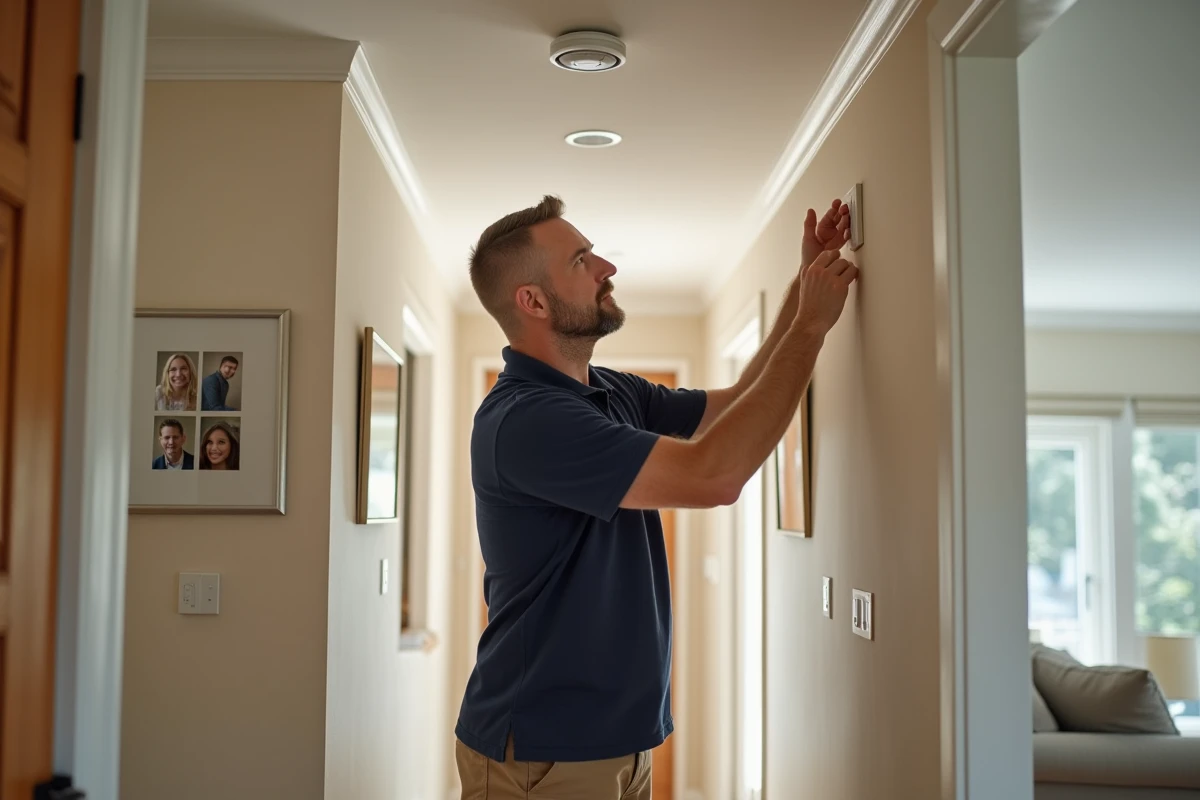
Protecting a home is not just about installing an alarm on the front door. The risks that a residence faces are numerous (intrusion, fire, gas leak, water damage), and the protective equipment must address each of these scenarios. Since 2024, European regulations have tightened the framework for connected home security devices, changing the game for both homeowners and renters.
European Regulation and Connected Devices: What Changes Since 2024
The European Regulation on Radio Equipment (Radio Equipment Directive, RED 2023) now imposes enhanced requirements regarding interoperability, software security, and data protection for all connected devices sold in Europe.
In practice, a connected smoke detector or a Wi-Fi alarm purchased in 2025 must meet stricter standards than a model acquired three years earlier. Manufacturers are required to provide security updates and ensure that their products communicate with other systems without creating exploitable vulnerabilities.
For individuals, the consequence is simple: checking for CE compliance and the market launch date of a device is no longer an administrative detail; it is a precaution that determines the reliability of the device over several years. Among the equipment offered by Protect Habitation, this compliance with recent standards is a key selection criterion.

AI Intrusion Detection: Reducing False Alarms and Current Limitations
Since 2023, manufacturers like Ajax Systems, Bosch Security, and Arlo have integrated artificial intelligence image analysis into their cameras and residential hubs. The stated goal: to distinguish a human from an animal or a moving branch, thus reducing the false alarms that represent the majority of triggers in traditional systems.
The Intelligent Video Analytics engine from Bosch Security is now integrated into residential solutions. The principle relies on video verification before any alert is transmitted to a monitoring center or law enforcement.
What AI Changes for Remote Monitoring
AI-assisted video verification allows monitoring operators to receive only pre-qualified alerts. Instead of responding to every signal, they handle already filtered events, which shortens the time between detection and reaction.
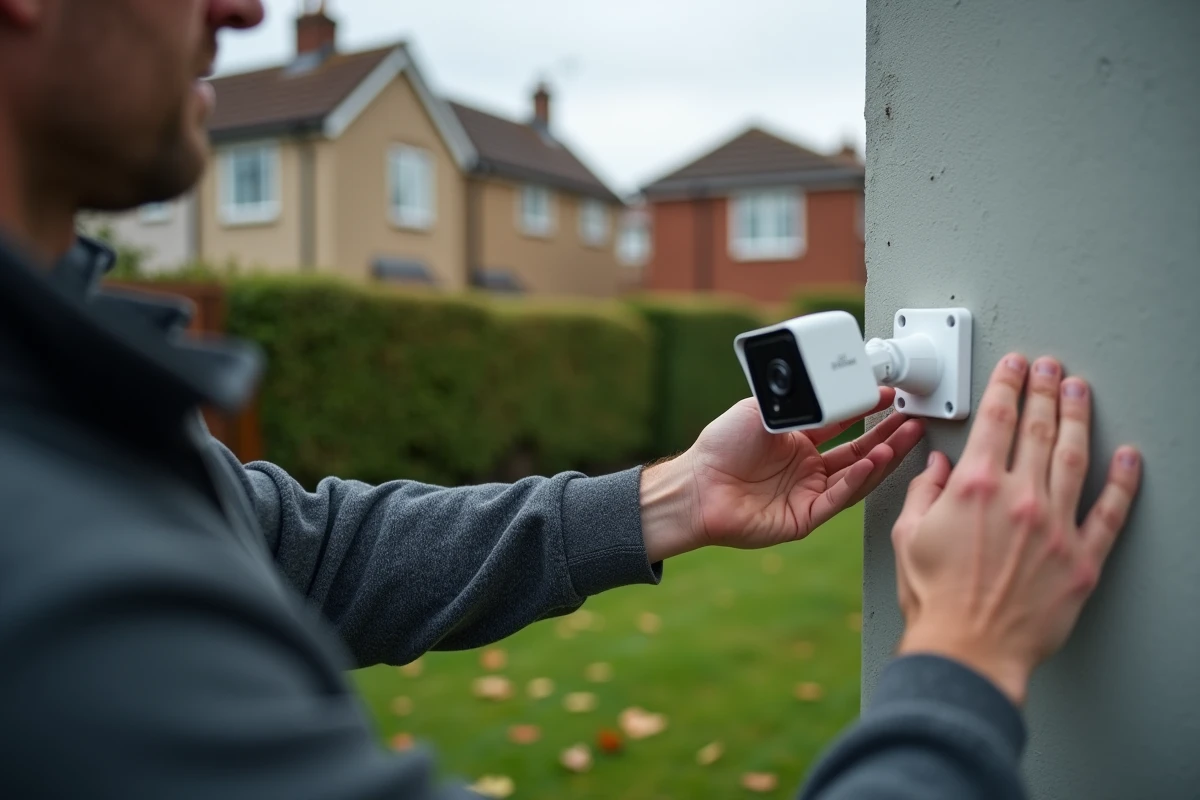
Field feedback varies on this point. The reliability of these systems heavily depends on installation quality (camera angle, ambient lighting, covered area). A poorly positioned sensor generates as many false positives as a basic infrared motion detector, AI or not.
- Ensure that the camera covers an unobstructed area, without dense vegetation in the field of view, to maximize detection accuracy
- Favor systems that offer regular updates to the AI model, as algorithms improve over time with user feedback
- Ensure that image storage complies with GDPR, especially if the field of view captures part of the public road
Protection Against Domestic Risks: Beyond Burglary
The security of a residence is not limited to preventing intrusions. Domestic fires and carbon monoxide poisoning cause significant damage every year. The smoke detector has been mandatory since January 1, 2016 in every residential space, with one device required per level.
The property owner is responsible for installation. The tenant, on the other hand, must ensure the device is functioning properly. This distinction is often misunderstood, leading to situations where no one checks the battery status or the expiration date of the sensor.
Fire Extinguisher, Fire Blanket, and Carbon Monoxide Detector
A mobile powder fire extinguisher, known as universal, placed in the entrance, kitchen, or garage, allows for neutralizing a fire before it spreads. The fire blanket complements the extinguisher to smother flames on a localized source, such as a pan or electrical device.
The carbon monoxide detector (DAACO) remains optional but is recommended in any home equipped with a combustion device (boiler, fireplace, stove). This gas, odorless and colorless, is responsible for a significant number of hospitalizations each winter.
Mechanical Reinforcement of Access Points: Doors, Windows, and Weak Spots
Burglars primarily target the least resistant entry points. The front door, ground floor windows, garage door, and service door are the most vulnerable accesses. Before investing in electronics, mechanical reinforcement of openings remains the first line of defense.
A certified A2P multipoint lock (three levels of resistance) significantly slows down an attempted break-in. The more mechanical resistance requires a long and noisy effort, the more it acts as a deterrent, even if the exact threshold varies depending on the context.
- On windows, anti-burglary glazing (minimum P2A rated) complicates breaking the glass without excessively weighing down the frame
- Rolling shutters with automatic locks add a layer of physical resistance, especially during prolonged absences
- Anti-pinch corners on doors prevent the use of a crowbar, one of the most common burglary techniques
- Outdoor motion-detecting lighting, positioned above access points, acts as a simple and cost-effective deterrent
The combination of mechanical and electronic equipment forms what installers call layered protection. Each device complicates a step in the intrusion scenario, with none being sufficient on its own. An alarm system without a reinforced lock offers less protection than a good lock without an alarm, because the duration of physical resistance conditions the effectiveness of everything else.
The choice of equipment depends on the configuration of the residence, the available budget, and the local risk level. An apartment on an upper floor does not have the same vulnerabilities as a house with a garden. The next step for every homeowner is to identify their specific weak points before selecting the appropriate equipment.