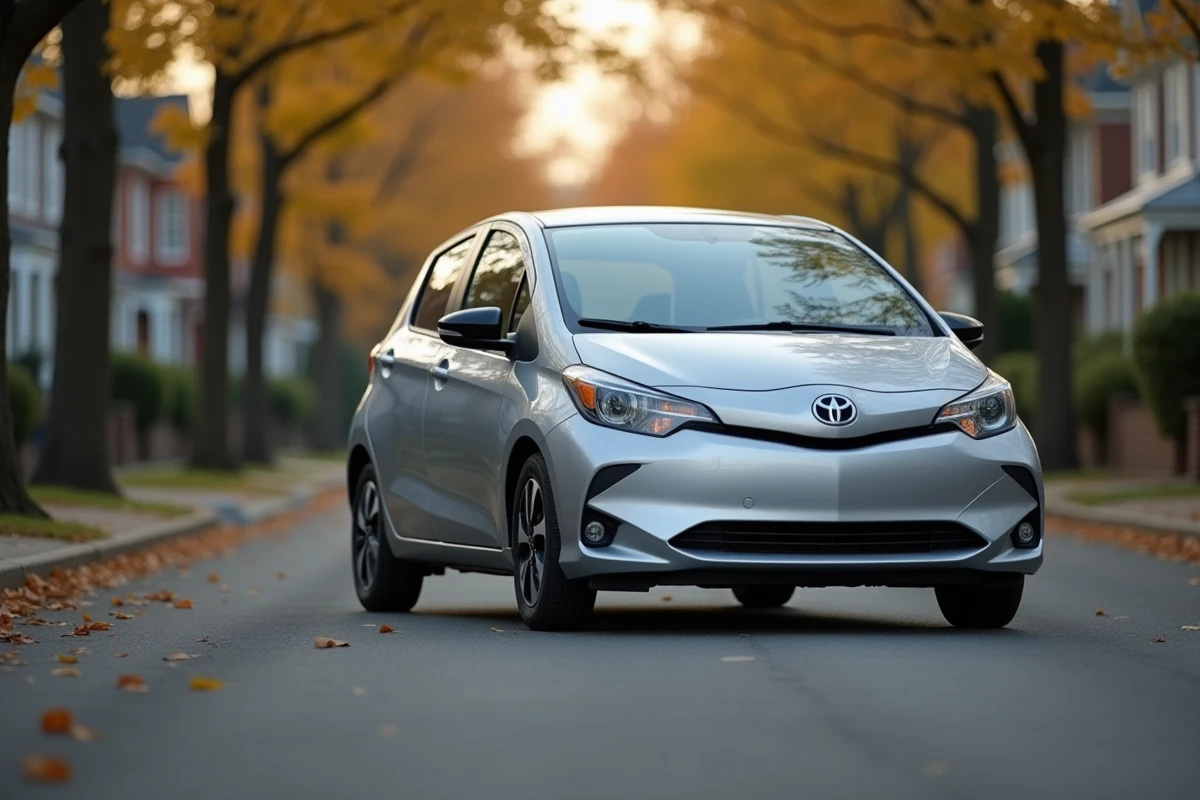
A 90 hp engine today places the driver in a narrow compromise zone. Neither underpowered for the city nor truly comfortable on a busy highway, this power level deserves precise technical analysis before any purchase, new or used. The 90 horsepower segment has indeed evolved significantly in recent years, and what was easily found in the catalog in 2018 may no longer exist in 2025.
Power-to-weight ratio on current models: the true indicator of a 90 hp car
Raw power means nothing without relating it to the vehicle’s mass. A 90 hp engine in a B-segment city car (like Clio, 208) offers a still acceptable power-to-weight ratio for mixed use. The same engine under the hood of an urban SUV or a C-segment crossover radically changes the situation.
Modern vehicles have significantly increased in weight due to mandatory safety equipment (side airbags, driver assistance systems, structural reinforcements). A 90 hp engine in a heavier vehicle requires frequent downshifts, increased engine noise under heavy load, and significantly longer overtaking times on fast lanes.
We observe that drivers often underestimate this effect. The technical sheet states 90 hp, but the dynamic feeling depends on the torque available at low revs and the effective power curve. An atmospheric gasoline engine of 90 hp and a turbocharged engine of the same power do not drive in the same way at all.
To learn everything about the power of a 90 horsepower car, this data must be cross-referenced with the type of engine, the empty weight, and the maximum advertised torque.

90 hp engine in new cars: an offer that is becoming rarer in the catalog
In the recent French market, several thermal engines of 90 hp have been removed from catalogs in favor of engines with 100 to 110 hp. Euro 6d standards and the prospect of Euro 7 are pushing manufacturers to homologate engines that better meet emission thresholds on heavier vehicles.
This trend reduces the choice for a buyer of a new vehicle. Where Renault, Peugeot, or Citroën systematically offered an entry-level model at 90 hp, the first threshold is now often around 100 hp, sometimes with mild hybridization. The additional cost at purchase remains moderate, but it exists.
In hybrid or electric vehicles, the notion of 90 hp takes on a different meaning. The instant torque of an electric motor partially compensates for the deficit in pure power. We recommend not to directly compare the horsepower of a thermal engine with that of a hybrid powertrain without looking at the torque curve.
Used 90 hp cars: the trap of old diesel
It is in the used market that the 90 hp segment remains the most abundant. Diesel engines of this power (like 1.5 dCi or 1.4 TDI 90) are very common and display attractive prices. Several specialists position the 90 to 115 hp range as a reasonable compromise for long journeys.
The fuel savings of an old 90 hp diesel can be negated by recurring breakdowns. Feedback on engines like the 1.4 TDI 90 indicates failures of water pumps, flywheels, and cooling peripherals, where repair costs sometimes exceed the savings made at the pump over the entire ownership period.
Before purchasing a used vehicle in this power segment, we recommend checking three specific technical points:
- The maintenance history of the cooling system, particularly the replacement of the water pump and thermostat, often neglected on small diesels
- The condition of the dual-mass flywheel, whose replacement represents a significant budget on diesel engines in this range
- The operation of the turbo and the absence of axial play, as a worn turbo on a 90 hp engine turns driving into a difficult exercise
Suitable uses and concrete limits of a 90 horsepower engine
A 90 hp engine suits a well-defined usage profile. In urban and suburban use, with short to medium trips and a light vehicle, the power is sufficient. Fuel consumption remains controlled, insurance costs are lower than with a higher engine, and the contained fiscal power limits the price of the registration document.
The 90 hp shows its limits as soon as the vehicle is loaded or the terrain becomes hilly. Mountain trips, even light towing, highways with passengers and luggage: in these situations, the engine constantly operates at high revs. Driving comfort deteriorates, driver fatigue increases, and consumption rises significantly beyond the advertised values.
Here are the cases where a 90 hp poses a real sizing problem:
- Towing a trailer or light caravan, where the available torque is too low to maintain a safe speed uphill
- Regular highway driving at full load, with overtaking requiring significant anticipation and prolonged acceleration
- Driving in the mountains with repeated elevation changes, where the engine remains constantly revved
Insurance and tax cost: the advantage that remains tangible
The only area where the 90 hp retains a clear and measurable advantage is in administrative expenses. Low fiscal power means cheaper registration and lower insurance premiums. For a young driver or one with an unfavorable bonus-malus, the difference in annual premium between a 90 and a 130 hp can justify the choice.
The market is shifting towards slightly more powerful engines in the entry-level segment. Choosing a 90 hp in 2025 remains relevant for a light city car intended for primarily urban use. For any other profile, the 100-110 hp now constitutes the new comfort threshold, with a price difference at purchase often marginal for new cars and almost nonexistent for used ones.