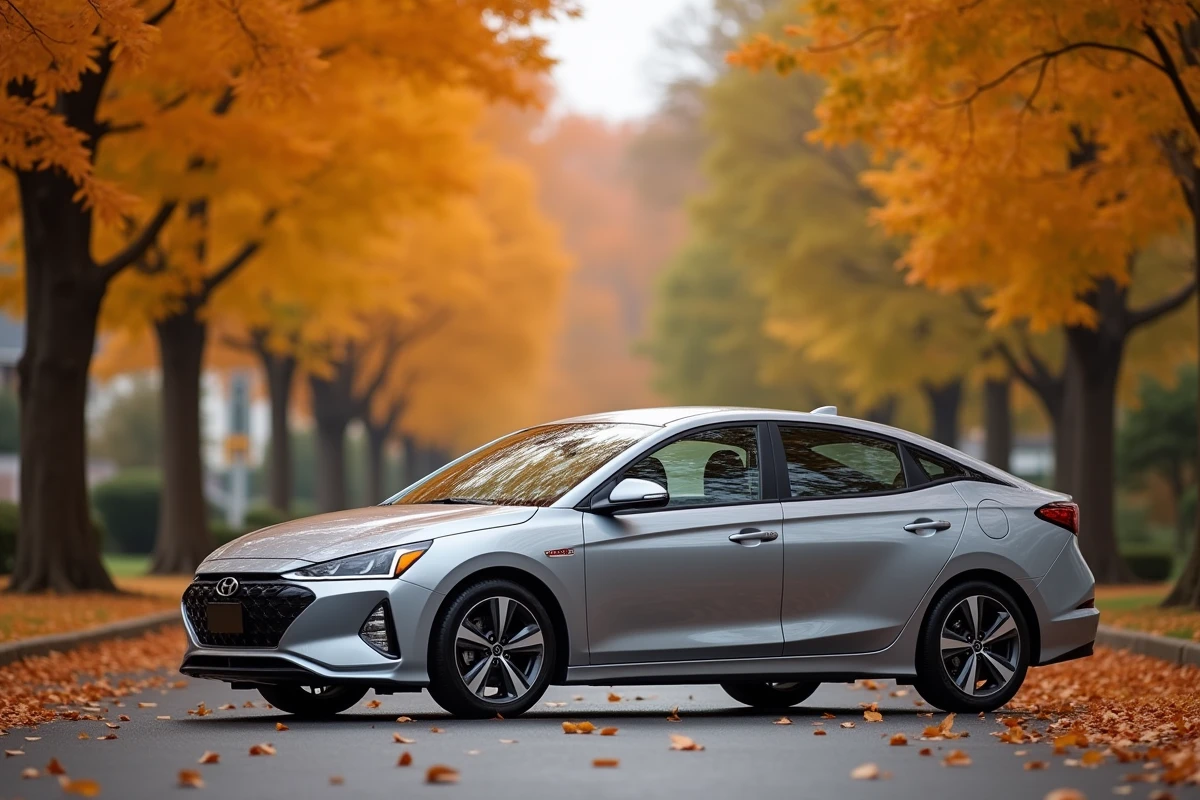
Non-rechargeable hybrids now capture a dominant share of the French market, while plug-in hybrids are significantly declining. Comparing these two technologies based on measurable criteria (reliability, real consumption, cost of use) changes the interpretation of the usual rankings. Here’s what recent data reveals about choosing a hybrid vehicle.
HEV Reliability vs. PHEV: Gaps Measured by Consumer Reports
Most guides rank hybrid models by segment or price. They overlook a parameter that weighs heavily on the total cost of ownership: the reliability comparison between the two families of powertrains.
A Consumer Reports survey covering around 380,000 vehicles (up to the 2025 models) delivers clear results. PHEVs show about 80% more problems than comparable gasoline cars. In contrast, HEVs exhibit about 15% fewer problems than their thermal equivalents.
| Criterion | HEV (simple hybrid) | PHEV (plug-in hybrid) |
|---|---|---|
| Reliability vs. thermal (Consumer Reports) | ~15% fewer problems | ~80% more problems |
| Market share France (Jan-Feb 2025) | 44.3% (+51% year-on-year) | 4.4% (-49% year-on-year) |
| External charging required | No | Yes (socket or charging station) |
| Crit’Air sticker | Crit’Air 1 | Crit’Air 1 |
This table summarizes the structural gap between the two technologies. A ranking of the best hybrid vehicles would benefit from incorporating this reliability data, often absent from selections focused on power or range.

Market Shares in France: Why HEV Dominates in 2025
The registration figures for VPN (new private vehicles) in France for early 2025 confirm a rapid shift. The non-rechargeable hybrid represents 44.3% of the market, up 51% year-on-year. The PHEV, on the other hand, drops to 4.4%, a decrease of 49% over the same period.
Several factors explain this decline in PHEVs:
- The gradual end of purchase aids for plug-in hybrids in France pushes buyers towards less expensive alternatives
- The mechanical complexity of PHEVs (two complete powertrains, large battery, dedicated thermal management system) increases the risk of breakdowns and maintenance costs
- The gap in real consumption compared to manufacturer data is more pronounced for PHEVs, especially for drivers who do not regularly charge their battery
HEVs are appealing because they require no change in habits. No charging station to install, no charging time to plan. The battery recharges itself through regenerative braking and the thermal engine.
Access to ZFE and Crit’Air Sticker: An Often Underestimated Hybrid Choice Criterion
All hybrid cars benefit from the Crit’Air 1 sticker, whether they are HEVs or PHEVs. Following the Constitutional Council’s decision confirming the framework for low-emission zones (ZFE), this point takes on concrete importance for urban drivers.
In contrast, a recent thermal vehicle may be classified as Crit’Air 2 or even Crit’Air 3 depending on its first registration date and powertrain. Choosing a hybrid guarantees access to city centers subject to restrictions, without the limited range constraint of a 100% electric vehicle.
What This Changes in Daily Life
For a driver who alternates between urban trips and long journeys, the HEV with Crit’Air 1 offers a compromise that neither thermal nor pure electric vehicles cover as simply. The PHEV does not provide any additional Crit’Air advantage compared to the HEV, which reduces its appeal for those solely needing access to ZFE.
Real Consumption and Cost of Use: What Technical Sheets Don’t Say
Manufacturers display mixed consumption figures measured according to the WLTP cycle. For a PHEV, this cycle assumes a fully charged battery at the start, which results in very low values (sometimes less than 2 l/100 km on paper). In real use, a PHEV that is not regularly charged consumes as much, if not more, than a comparably sized HEV. The added weight of the battery (several hundred kilos) penalizes efficiency in pure thermal mode.
A well-utilized HEV consumes between 4 and 5 l/100 km on a realistic mixed cycle, according to documented usage feedback on models like the Toyota Yaris Cross or the Renault Clio E-Tech. Maintenance costs remain close to those of a conventional thermal vehicle, without the expense associated with replacing a high-capacity battery.
- Toyota remains the benchmark for HEV reliability, with over two decades of experience in this technology
- Renault and Peugeot now offer competitive E-Tech and Hybrid powertrains in the urban and compact SUV segments
- Non-rechargeable hybrid SUVs combine space, versatility, and controlled consumption, which explains their commercial success
The choice between HEV and PHEV boils down to a simple point: the regularity of charging. A driver with a home charging station who drives less than 50 km per day will benefit from the electric mode of a PHEV. For all other profiles, the HEV offers a better balance between initial investment, cost of use, and mechanical peace of mind.
Reliability data and market shares converge towards the same conclusion: the simple hybrid remains, in 2024-2025, the most rational choice for the majority of French drivers.