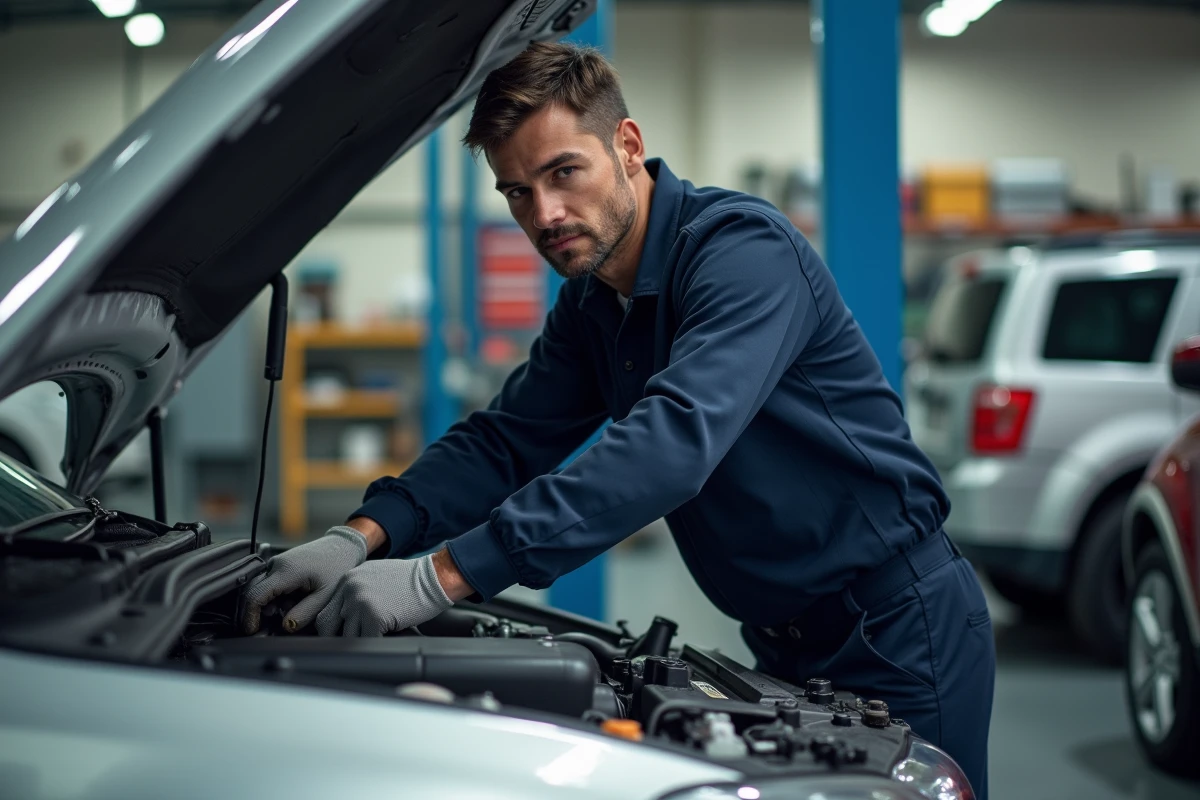
Between regular maintenance, administrative formalities, insurance, and mechanical surprises, managing a vehicle requires a considerable amount of time. What automotive services actually help reduce this burden, and on what criteria can they be compared to make choices suited to daily use?
Mobile and workshop automotive services: what each option concretely offers
The classic model of a physical garage remains dominant in France, but a range of mobile automotive services has been developing over the past few years. For example, Feu Vert Services Mobiles and Norauto Mobile deploy mobile workshops capable of performing maintenance, tire changes, or diagnostics directly at home or at the workplace.
The difference is not limited to the location of the intervention. Online appointment booking and digital payment eliminate two trips (to and from the garage) and the associated waiting time.
| Criterion | Fixed workshop (garage, auto center) | Mobile service (at home/office) |
|---|---|---|
| Types of interventions | Full maintenance, heavy repairs, bodywork, technical inspection | Routine maintenance, tires, diagnostics, minor repairs |
| Appointment booking | By phone or online depending on the network | Online with a specific time slot |
| Time spent by the owner | Round trip + waiting | No travel, on-site intervention |
| Geographical availability | Wide territorial coverage | Mainly urban and suburban areas |
| Complex repairs | Yes (lift, heavy tools) | No (limited by onboard equipment) |
For a driver in an urban area whose vehicle primarily requires routine maintenance, the mobile service eliminates the main logistical constraint. However, any intervention requiring a lift or a technical inspection necessitates a trip to a center.
Among the services offered by Aide Auto, this support logic is also found, covering both administrative procedures and guidance towards the right type of service based on the driver’s situation.

Connected car and telematics: maintenance alerts, driving coaching, and tailored insurance
Services related to the connected car represent a shift in automotive management. Several French insurers (Maif, Groupama, Allianz) offer plans with a device or app that provides real-time driving data.
These devices serve three distinct functions:
- Automatic maintenance alerts based on actual mileage and vehicle condition, preventing missed deadlines or premature maintenance costs.
- Driving coaching with analysis of accelerations, braking, and turns, useful for reducing fuel consumption and mechanical wear.
- Adjustment of the insurance premium based on the driver’s actual behavior, a model known as “pay how you drive” that rewards smooth driving.
Manufacturers (Renault, Stellantis, Volkswagen) are also developing connected portals integrated into the vehicle. These interfaces centralize mileage tracking, location in case of theft, and planning of interventions with an authorized repairer.
Telematics transforms preventive maintenance into an automated process. The driver no longer has to remember the date of their last oil change or the mileage for brake pad replacement: the system notifies them.
Fleet management for businesses: tools and technical support
For a company managing a fleet of several vehicles, the stakes change scale. Fleet management relies on dedicated tools that centralize the tracking of each vehicle: technical condition, inspection deadlines, fuel consumption, assignment to drivers.

Fleet management platforms allow for cross-referencing this data to identify the most costly vehicles to maintain and decide between repair and replacement. This type of analysis, nearly impossible to conduct manually beyond a few vehicles, becomes a lever for reducing operating costs.
Transition to electric vehicles in a professional fleet
Integrating electric vehicles into a professional fleet adds specific parameters: managing charging stations, monitoring actual range based on trips, and planning maintenance (which differs significantly from thermal vehicles, with fewer wear parts but constraints on the battery).
Companies initiating this transition need technical support on the compatibility between their uses and the available electric offerings, rather than just a simple catalog of models.
Administrative procedures and technical inspections: persistent friction points
Registration certificate, transfer declaration, address change, duplicate registration certificate: these formalities remain a source of time loss, despite the digitization efforts on the ANTS website. Processing times vary, and data entry errors lead to frequent rejections.
Administrative support services handle these procedures on behalf of the owner. The gain is measured less in money than in time and peace of mind, especially during the purchase or sale of a used vehicle where several formalities are sequential.
The technical inspection, mandatory according to a periodicity set by regulations, remains a visit to a physical center. Anticipating the appointment booking avoids waiting times that lengthen during certain times of the year, particularly before the summer holidays.
The choice between these different automotive services depends on the usage profile: urban or rural, personal vehicle or fleet, thermal or electric. The key data remains the total time spent managing the vehicle each month. Reducing this time relies less on a miracle service than on the combination of several solutions tailored to one’s actual situation.