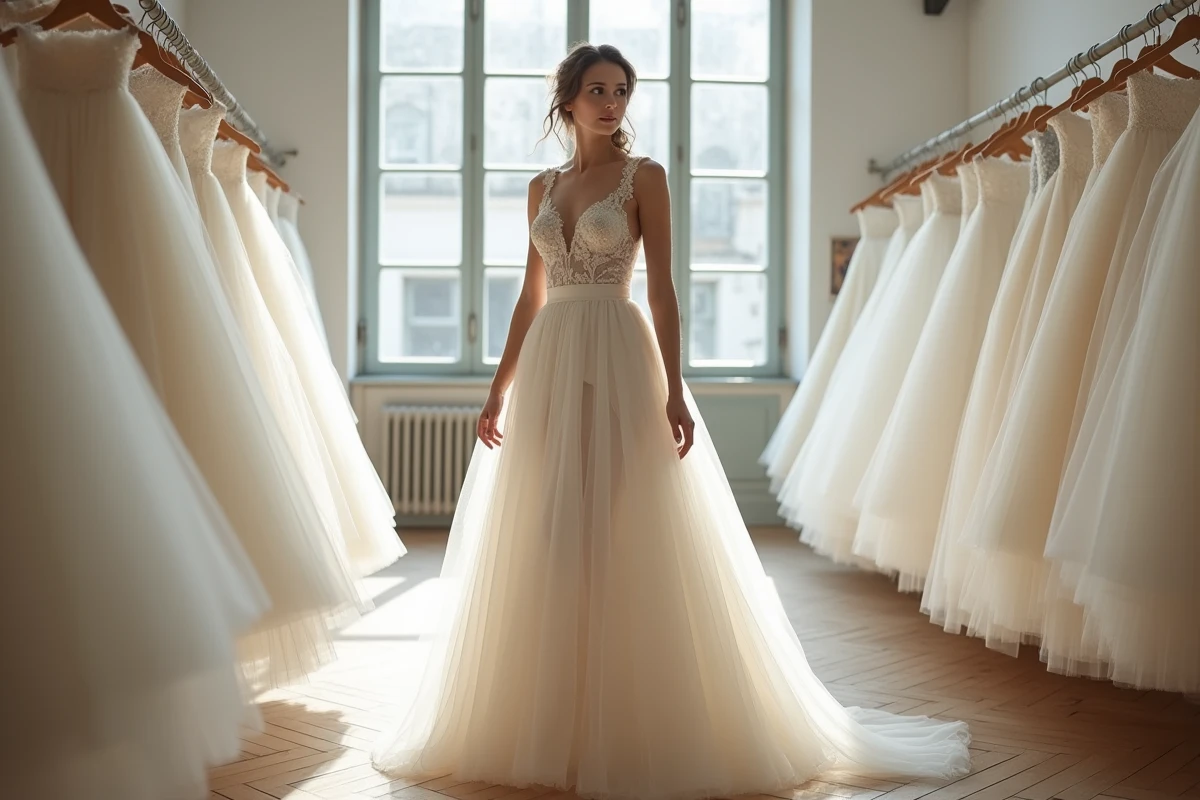
Tulle is everywhere in bridal gown displays. Layered in voluminous skirts, draped as a veil over the shoulders, or embroidered with floral patterns, this open-weave fabric gives wedding silhouettes their airy character. However, not all types of tulle are created equal, and choosing the right type affects the comfort, drape, and even the durability of the dress.
Soft, Rigid, or Stretch Tulle: Understanding Behavioral Differences
Have you ever touched a very fine bridal veil, almost invisible on the skin, and then a voluminous skirt that stands on its own? These two pieces are made of tulle, but their behavior is completely different. The difference lies in the type of weave and the fiber used.
Soft tulle is the most common for flowing dresses. Made from polyamide or silk, it drapes naturally and follows the body’s movements. This is the type found in multi-layered skirts, where each layer adds volume without stiffness.
Rigid tulle, on the other hand, serves as a structure. Placed underneath a skirt, it creates a princess effect or flared shape. It does not flatter the skin upon direct contact, but it gives architecture to the silhouette.
Stretch tulle, more recent, incorporates elastane into its composition. It allows for fitted dresses that follow the body shape without compressing. To better understand these nuances, the tulle fabric presented by Cœur de Mariage details the specific uses of each variant.
In summary, the type of tulle determines the silhouette much more than the pattern cut. A mermaid dress in stretch tulle and a princess dress in rigid tulle do not use the same material at all, even if the word “tulle” appears on both labels.
Tulle and Lace in a Wedding Dress: Two Complementary Roles
Many future brides hesitate between tulle and lace. In reality, these two materials often combine rather than oppose each other.
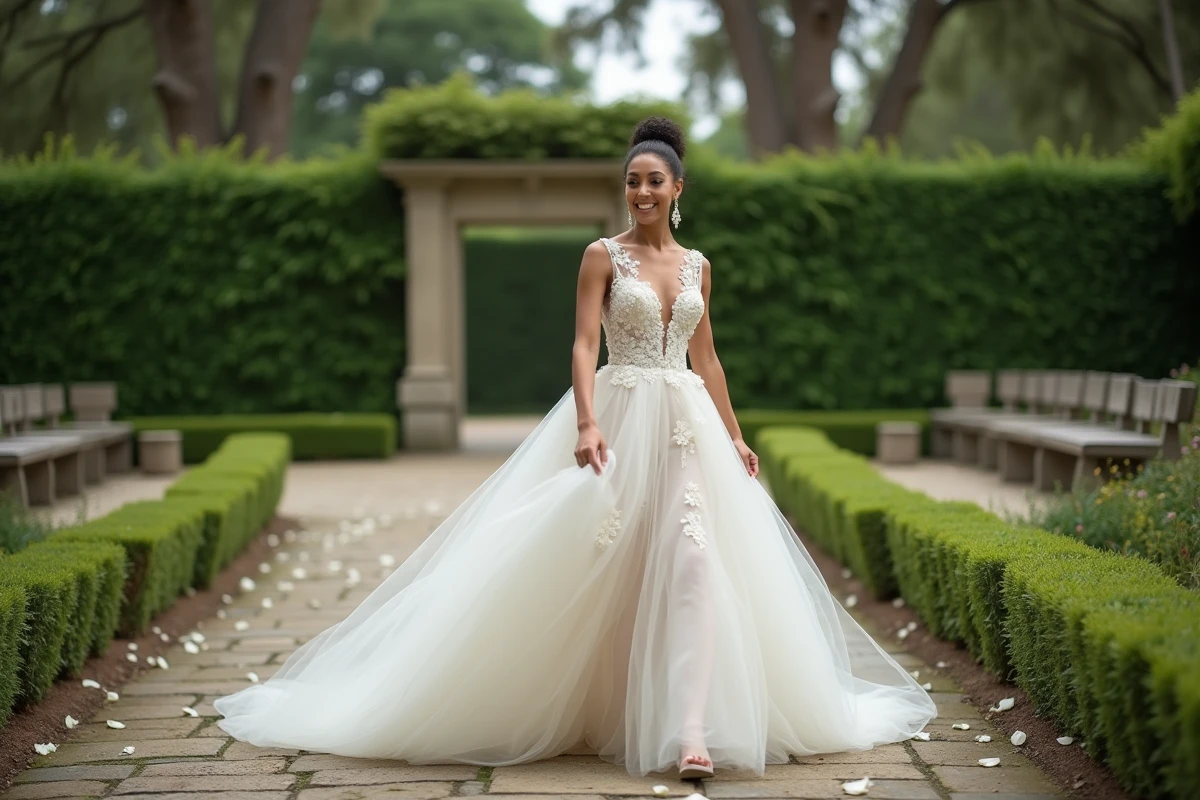
Lace adds pattern, relief, and a visual anchor. Tulle provides transparency and lightness between the embroidered areas. On a bodice, for example, lace structures the bust while tulle covers the shoulders or décolletage with a “second skin” effect.
Why the Order of Layers Matters
In a quality dress, lace is always applied over tulle, never the other way around. This technical detail has a direct impact on the appearance. Lace placed on a fine tulle background appears to “float” on the skin. If tulle were to cover lace, the patterns would lose their sharpness and the whole would seem blurry.
During a fitting, look at the inside of the dress. The finishes reveal the assembly method:
- Lace edges are individually cut and sewn onto the tulle, with no visible fabric surplus on the reverse side
- The underlying tulle is continuous, with no seams or joints visible in the transparent areas
- The transition areas between lace and bare tulle do not have any excess thickness to the touch
These clues are more reliable than the displayed price for assessing the quality of a dress.
Eco-Responsible Tulles: A Recent Evolution for Wedding Dresses
The bridal tulle market is no longer limited to a choice between synthetic and silk. Since 2023, several manufacturers have introduced tulles made from recycled polyester or bio-sourced fibers (from corn or sugarcane) intended for the bridal sector.
Some French textile players, such as the Payen group, now offer tulle made from recycled polyamide and polyester, claiming a reduced carbon footprint compared to virgin tulles.
At the Première Vision Paris trade show in 2023 and 2024, an emerging trend was also identified around bast fibers (notably hemp) for tulles intended for haute couture and independent workshops.
European Regulation and Microfibers
Regulatory pressure is also affecting bridal tulle. The European Commission, as part of its strategy for sustainable and circular textiles published in March 2022, is working on requirements to reduce microplastics released by synthetic textiles. Polyester or polyamide tulles for wedding dresses will be affected in future updates to eco-design standards.
For a future bride, this means that workshops offering bio-sourced or recycled alternatives are not just following a trend. They are anticipating a framework that will tighten in the coming years.
Choosing the Right Tulle According to the Season and Silhouette
Tulle reacts differently depending on temperature and humidity. A few practical guidelines can help avoid unpleasant surprises on the big day.
- Summer Wedding: opt for soft tulle in a single layer or a maximum of double layers. Each additional layer retains heat, especially in princess-style models
- Winter Wedding: structured rigid tulle handles layering better and adds volume without the cold affecting the drape of the fabric
- Mermaid or Sheath Silhouette: stretch tulle remains the best ally. It maintains the fitted shape while allowing for walking, sitting, and dancing
- Princess or A-line Silhouette: combining rigid tulle in an underskirt with soft tulle in the outer layer produces controlled volume without a cardboard effect
The weight of the tulle also plays a role. Very lightweight tulle wrinkles more during transport and hours of sitting at the table. A medium-weight tulle withstands a full day of celebration better.
Tulle remains the fabric that offers the most possibilities for silhouettes in a wedding dress, provided you choose the right variant for the right use. Between the developing recycled versions and combinations with lace, it’s the technical detail of tulle that makes the difference between a dress that is worn and one that is endured.