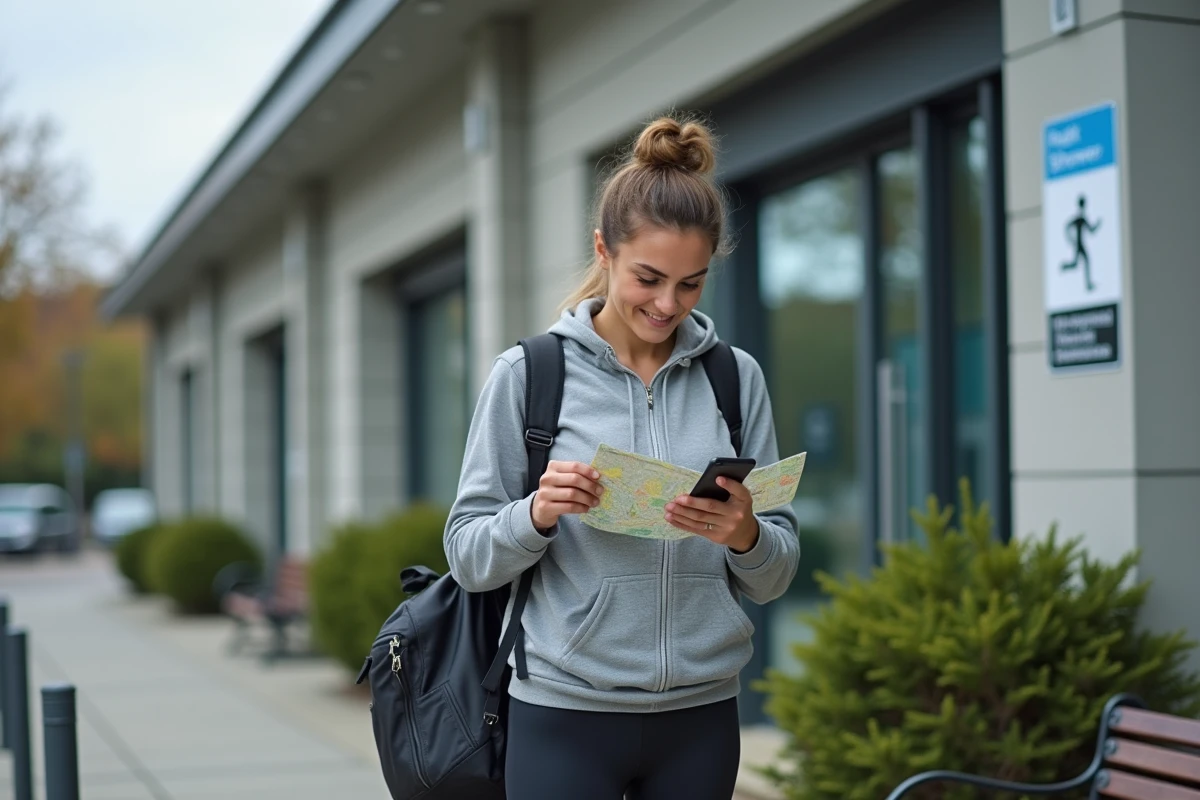
You arrive at a rest area at the end of the day after six hours of driving, and the only desire left is for a shower. The problem is that most facilities advertised as “free” online are actually reserved for camping customers, users of a municipal swimming pool, or accessible for a few euros. Knowing how to distinguish a truly free shower from a conditional access changes the game when traveling by van, bike, or backpack.
Showers at camper van areas and marinas: the most reliable network
Before looking for an app or asking on a forum, you save time by targeting facilities designed for itinerant travelers. Service areas for camper vans, marinas, and seaside resorts form a dense network, especially along the coast and in tourist areas.
At a municipal camper van area, the shower is often included in the free or nominal parking fee. Feedback varies on this point: some municipalities close the showers off-season or reserve them for vehicles parked overnight. So, always check availability before counting on it.
Marinas are a blind spot for many land travelers. The harbor master’s office has sanitary facilities with showers, and in small ports, access is often free during the day. We are not talking about large marinas where everything is locked with a badge, but about municipal facilities in coastal villages, where supervision is minimal and the atmosphere is relaxed.
For those looking to know where to find a free public shower systematically, the logic remains the same: prioritize places designed to accommodate transient people rather than classic urban facilities, which are often closed or charge fees.
Beach showers and municipal facilities: the seasonal variable
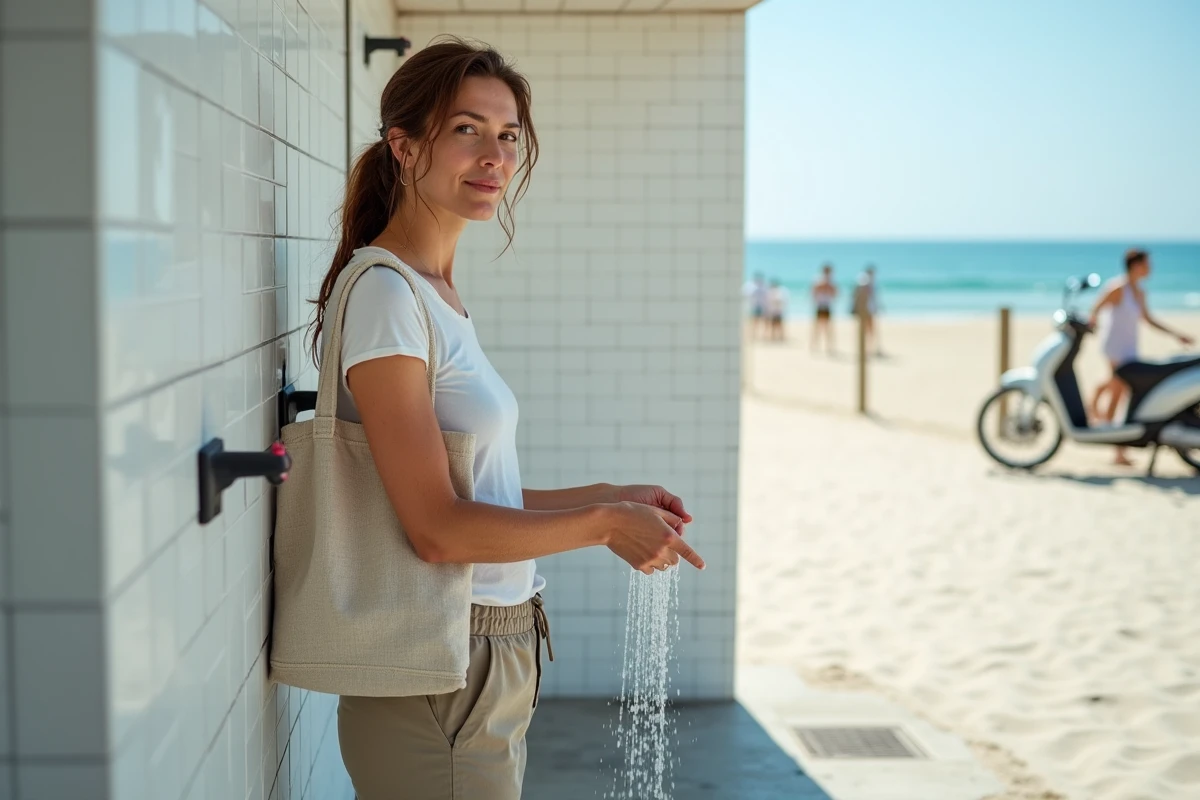
Beach showers represent the most visible solution in summer. Almost all coastal municipalities install them at the main access points to the beaches. They operate with cold water, sometimes lukewarm, and remain accessible without conditions.
The trap is seasonality. The majority of these showers close between October and April. Municipalities cut off the water to prevent pipe freezing and reduce costs. Relying on a beach shower in November on the Atlantic coast means risking finding a dry tap.
In cities, free municipal showers still exist in some large urban areas, inherited from a tradition of public bathhouses. Their numbers have significantly decreased, and those that remain are often aimed at a precarious audience. They can be accessed, but hours are limited and crowds can be significant.
Municipal pools and aquatic centers
A more comfortable alternative is to pay for entry to a municipal pool. The price for a single entry remains modest, and you gain access to hot showers, clean changing rooms, and sometimes a sauna. It’s not free in the strict sense, but the cost/comfort ratio is unbeatable for a tired traveler.
You can spot pools along your route the night before. A visit at the end of the day allows you to wash up, swim if you feel like it, and leave clean for the evening.
Collaborative apps to locate a free shower on the road
Park4Night remains the most cited app by van or camper travelers. It allows you to filter results by type of amenity, including showers. Listings are updated by users, with recent reviews and photos.
The problem with collaborative apps is reliability over time. A point marked as “free shower” two years ago may have changed status, closed, or switched to paid access. Always check the date of the last review before making a detour.
Here are the reflexes to adopt to get the most out of the apps:
- Filter by comment date: a review from less than three months ago is a good indicator of reliability.
- Cross-check sources: if a place appears on Park4Night and on iOverlander with consistent feedback, the likelihood that it is still active increases.
- Read negative comments first: they report closures, access restrictions, and degraded facilities much faster than positive reviews.
Field alternatives when no public shower is available
When driving in rural areas or mountains, free public showers become scarce. We then switch to field solutions that require minimal equipment.
The portable solar shower (a black bag of a few liters hung up high) works well in summer. You fill it in the morning, leave it in the sun on the roof of the vehicle, and by the end of the day, the water is at an acceptable temperature. Below twenty degrees outside, the result is disappointing.
Rivers and lakes offer a free and pleasant option when the weather permits. Avoid monitored swimming areas (where soap is prohibited) and use biodegradable soap, washing at a distance from the watercourse to avoid direct pollution.
The washcloth, an underestimated solution
Between two real showers, a damp washcloth and soap are enough to stay presentable. Focus on the areas that produce the most odor (armpits, feet, folds) and supplement with deodorant. It’s not glamorous, but on a road trip lasting several weeks, spacing showers two or three days apart quickly becomes normal.
Here’s a minimal kit to keep in the vehicle:
- A microfiber washcloth (dries quickly, takes up little space).
- A five-liter water jug filled at each water point encountered.
- Multi-purpose biodegradable soap (body, hair, dishes).
- A compact microfiber towel.
Finding a free shower while traveling relies less on luck than on a method: identifying service areas and ports before departure, cross-referencing data from collaborative apps, and keeping an emergency kit for dry days. Cleanliness while traveling is primarily about anticipation.