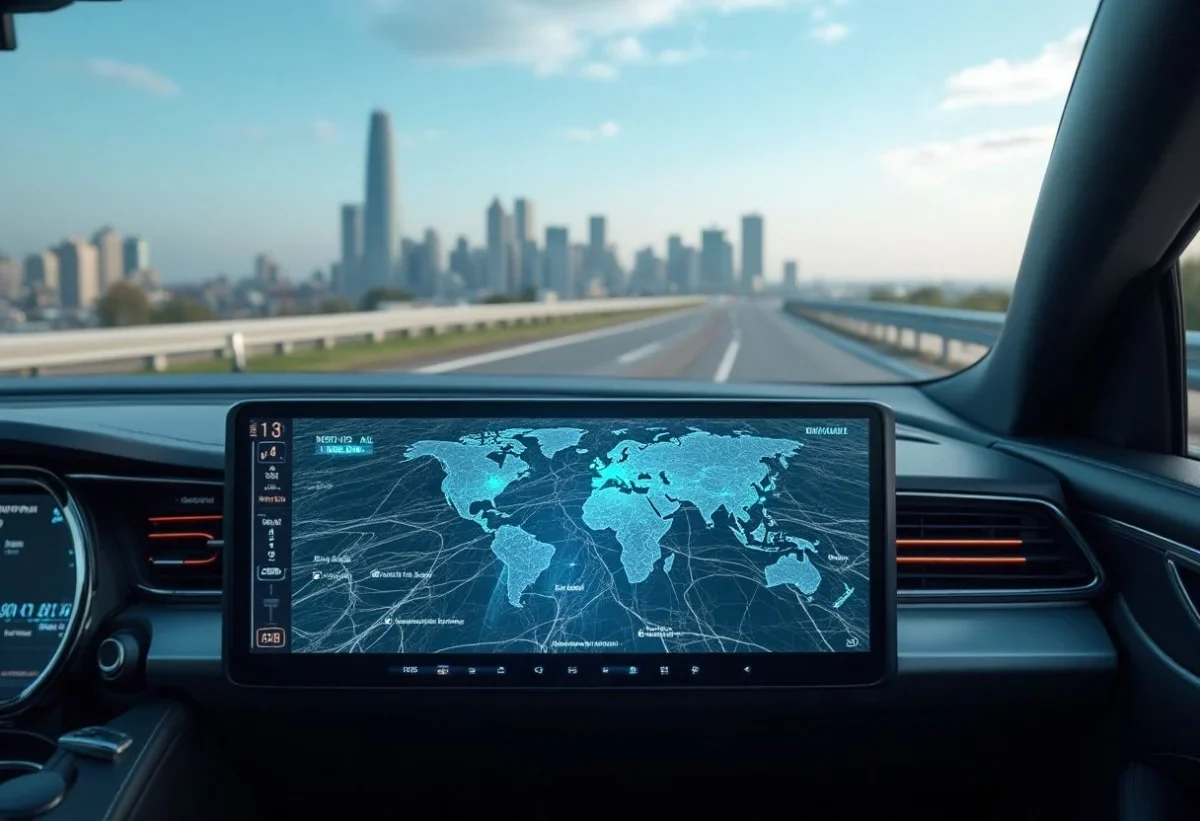
In the digital age, vehicle geolocation has become an essential tool for optimizing fleet management, enhancing road safety, and improving the driving experience. This technology, which utilizes satellite networks and advanced sensors, allows for real-time tracking of vehicle positions. It thus offers a multitude of advantages for both individuals and businesses. As the challenges related to urban mobility multiply, geolocation could represent a promising solution. With the rise of smart cities, this technology is becoming indispensable to adapt to new transportation challenges.
The foundations of geolocation
Understanding the basics of geolocation is essential to grasp its impact on modern mobility. This technology relies on several elements that work together to provide precise vehicle location.
- GPS: The Global Positioning System, commonly known as GPS, is at the heart of geolocation. It uses a network of satellites to determine the exact position of a vehicle.
- GLONASS and Galileo: These satellite systems, similar to GPS, are employed to ensure global coverage and increased accuracy.
- Embedded sensors: In addition to satellites, modern vehicles are equipped with sensors that collect data to improve location accuracy.
- Communication networks: Telecommunications technologies, such as 4G and 5G, play a key role in transmitting geolocation data.
Practical applications and benefits
Vehicle geolocation finds various applications that meet the needs of different users. Professionals and individuals alike benefit significantly.
Transport companies optimize their operations through real-time tracking, thereby improving efficiency and customer satisfaction. The collected data allows for planning more efficient routes, reducing fuel costs and environmental impact.
For individuals, geolocation offers peace of mind, especially in cases of theft or loss. Car insurance companies offer contracts tailored to driving behaviors observed through geolocation, promoting more responsible driving.
Public authorities, for their part, use this technology to smooth traffic and reduce congestion in densely populated urban areas.
Ethical and security issues
While vehicle geolocation opens up numerous opportunities, it raises crucial questions related to security and privacy protection.
The massive collection of personal data raises concerns about confidentiality. Users fear that their movements are being tracked and analyzed for commercial purposes. Companies must therefore ensure compliance with existing regulations, such as GDPR, to protect sensitive data.
The security of geolocation systems is also a major concern. Cyberattacks aimed at disrupting or hacking these systems represent a growing risk. It is therefore imperative to implement robust security measures to prevent any malicious intrusion.
The future of geolocation in mobility
As technology evolves rapidly, vehicle geolocation will continue to transform and adapt to the new needs of society.
With the rise of autonomous vehicles, the precision of geolocation is more crucial than ever. These vehicles require extremely accurate location data to navigate safely.
Moreover, the integration of artificial intelligence and machine learning into geolocation systems promises to further optimize routes by predicting traffic conditions. The future may also see the emergence of geolocation solutions based on technologies like blockchain, to ensure increased transparency and security.