
The year 2024 has reshuffled the cards of global sports on several simultaneous fronts. Between the preparation for the 2026 World Cup in the United States, the rise of streaming as the dominant channel, and the emergence of artificial intelligence in training, the sports landscape has transformed faster than in the previous decade. This article presents the facts, measurable developments, and the questions that remain open.
Sports Streaming and TV Rights: A Shifting Balance of Power
The standout fact of recent years in the world of sports is not happening on a field, but on a screen. Amazon Prime Video, DAZN, and YouTube are capturing an increasing share of global sports audiences. Some competitions, particularly in motorsports and basketball, are already recording more digital views than linear TV audiences.
This shift raises a concrete question for federations and leagues: should they prioritize a traditional broadcaster that guarantees a massive but aging audience, or a streaming platform that reaches a younger but fragmented audience? The available data does not yet allow for a definitive conclusion on the long-term profitability of these choices for smaller federations.
To keep track of these developments over the months, the latest news on Bonjour Sportif regularly covers updates on rights and broadcasts in French sports.
Meanwhile, the smartphone has become the primary screen for following sports in many regions (Asia, Africa, South America). Short formats (highlights, reels, TikTok, YouTube Shorts) are rapidly gaining ground at the expense of full matches, especially among those under 30. This phenomenon is redefining how sports media conceive their content.
Artificial Intelligence and Data Analysis in Sports Performance
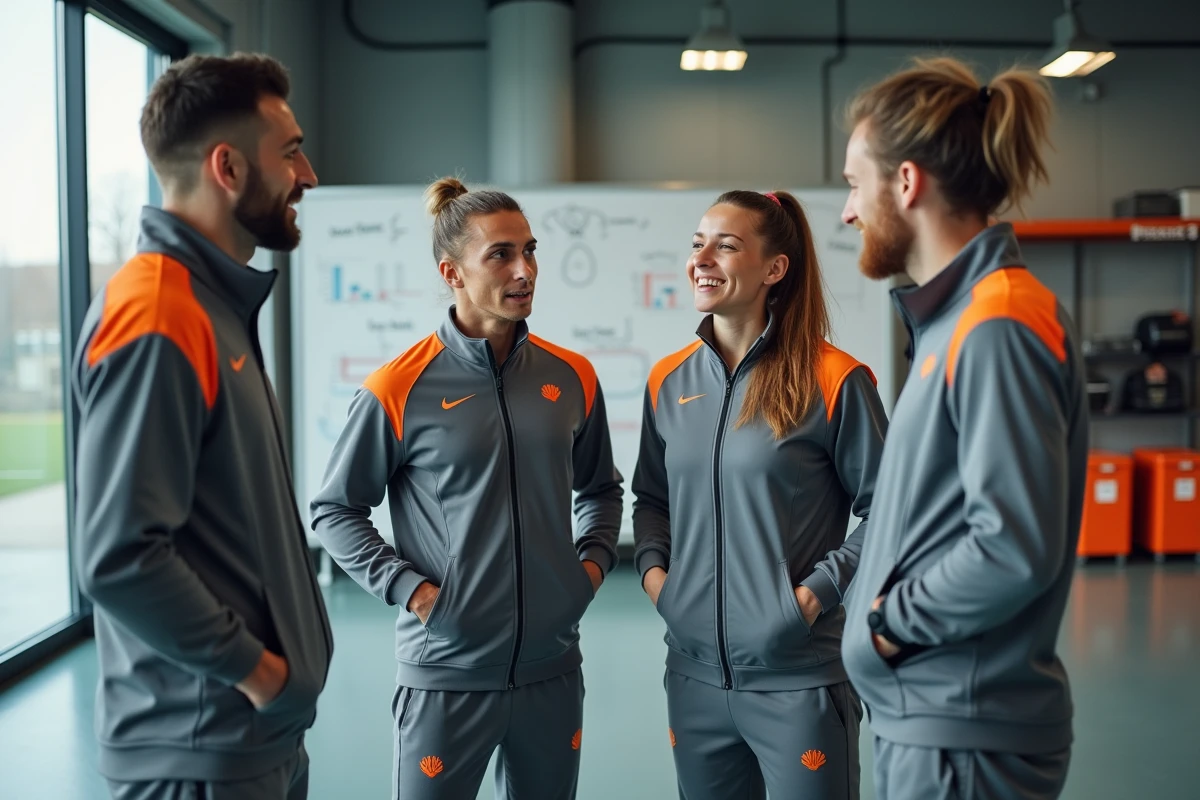
The integration of AI in athlete monitoring has reached a new level. Wearable devices (GPS, accelerometers, heart rate sensors) generate data volumes that only algorithms can process in real time. The goal is no longer just to measure training load, but to predict injury risks before they manifest.
Several professional football and rugby teams are now using machine learning models to adjust training plans individually. The principle: cross-referencing sleep data, muscle load, and running speed to determine whether an athlete can handle two intensive sessions in a row or needs to recover.
Current Limitations of These Tools
Field feedback varies on this point. Some physical trainers report that algorithmic recommendations sometimes contradict direct clinical observation. A player may show optimal metrics while feeling discomfort that the sensor does not detect.
The question of data ownership also remains open. Who owns the biometric information of a professional athlete: the club, the player, or the equipment manufacturer providing the sensor? No unified regulatory framework exists to date at the European level.
2026 World Cup and Football: Emerging Trends
The 2026 World Cup, organized in the United States, Canada, and Mexico, represents a logistical and economic turning point. The expansion to 48 teams results in a multiplication of matches and venues. For the French team and European selections, physical preparation for such an extensive format becomes a major strategic challenge.
Football remains the most followed sport in the world, but its economic model is evolving. The growth of the licensed sports merchandise market illustrates this dynamic. According to Fortune Business Insights, this global market is expected to grow from approximately 41.36 billion USD in 2026 to 56.21 billion USD in 2034, driven by fan engagement, league expansion, and e-commerce.
France and the Organization of Major Competitions
After the Paris 2024 Olympic Games, the question of sports legacy arises. Will the infrastructures built or renovated find sustainable use? France now seems out of the running to host a football World Cup in the medium term, which refocuses public investments on other disciplines.
The 2030 Winter Olympics in the Alps, whose emblems were recently unveiled, represent the next major French event. The issues of sustainability and cost remain at the center of discussions.
Amateur Sports and Youth Participation: A Quietly Growing Market
Professional sports capture media attention, but the most sustained growth may be on the side of amateur participation and youth. The youth sports market is experiencing steady expansion, fueled by several factors:
- The diversification of disciplines accessible from a young age, with sports like padel, trail running, or functional fitness (Hyrox) attracting new audiences.
- The influence of social media on adolescents’ sports choices, who discover activities through short content before signing up for clubs.
- The development of sports e-commerce, which facilitates access to specialized equipment even in rural areas.
The personalization of equipment and training programs is no longer reserved for professionals. Public applications now offer performance tracking that would have been considered elite level ten years ago.
Fashion and Sports: A Convergence Redefining the Codes
The 2026 World Cup has accelerated the convergence between fashion and football. Luxury brands are collaborating with federations, and national team jerseys are becoming full-fledged fashion pieces. This phenomenon goes beyond simple merchandising: it repositions the athlete as a cultural icon, not just an athletic one.
This trend directly fuels the growth of the licensed products market. Fans no longer buy a jersey just to go to the stadium, but to integrate it into their everyday wardrobe. Brands have understood this and are adjusting their cuts, materials, and limited editions accordingly.
Sports in 2024 and beyond can be read through these driving forces: the battle for screens, the emergence of data in performance, the economic reconfiguration around major competitions, and the widening of the participant base. Each of these axes evolves at a different pace, and the financial decisions of leagues in the next two years will determine which ones prevail sustainably.