Pizza, the universally loved dish, transcends borders to offer a myriad of flavors that reflect the cultural diversity of our globe. A culinary journey to discover pizzas from around the world is an exciting adventure, revealing how each country adapts this Italian classic to its own ingredients and culinary traditions. From spicy variations in India to sushi versions in Japan, and the rich, hearty toppings of the United States, each recipe tells a story, an heritage, and a lifestyle. It is an exploration that promises to enrich the palate and broaden culinary horizons.
The origins and evolution of pizza around the world
Pizza, this iconic dish, a mirror of Italian culinary culture, has continued to evolve since its first appearances in Naples, the birthplace of modern pizza. Under the expert hands of pizzaiolos, pizza has become a canvas of expression, a work of art where tradition meets innovation. Naples, this Mediterranean city, gave birth to Neapolitan pizza, a simple yet demanding recipe based on the quality and freshness of ingredients like tomatoes, mozzarella, and basil that proudly display the colors of Italy.
From one place to another, pizza has traveled across seas, taking root in distant lands, where each culture has adopted it, adapted it, thus reinventing the concept of this dish. The global spread of pizza testifies to its ability to fit into various contexts, embracing local tastes to give rise to an infinite number of types of pizza. Pizza is therefore a vehicle for sharing, a bridge between peoples, a universal language of flavors and conviviality.
At the heart of this perpetuation, the role of the pizzaiolo remains central. As a bearer of ancestral know-how, he perpetuates the art of pizza by ensuring the transmission of its secrets, thus ensuring the continuity of a centuries-old tradition. The pizzaiolo, far from being a mere craftsman, is the guardian of an intangible heritage, that of pizza culture, which unfolds and enriches at every street corner, in every wood-fired oven.
This global expansion of pizza has also raised awareness of the need to protect its origins. The European Union, by recognizing Neapolitan pizza as a gastronomic treasure, has erected a barrier against counterfeits, preserving the authenticity of a recipe that, while adapting, remains the embodiment of an authentic and unaltered Italian culinary tradition. Pizza has thus become a living legend, a culinary epic that continues to fascinate and inspire gourmets around the world.
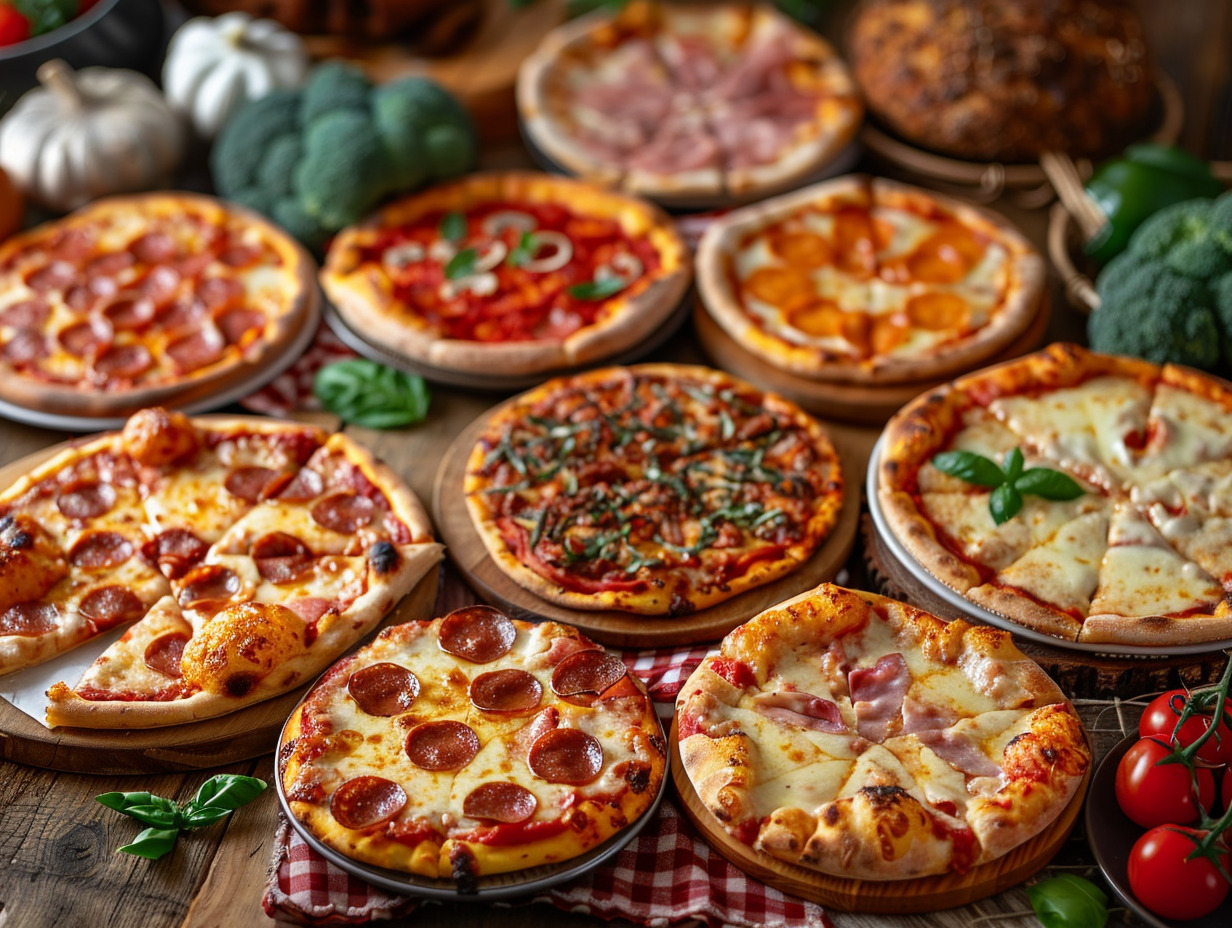
Iconic pizza specialties by region and country
Within Italy itself, the homeland of pizza, regional specialties carry the soul of their respective terroirs. The Neapolitan pizza, a gem of Naples, is distinguished by its dough that is both soft and crispy, topped with tomato, fiordilatte, a cheese similar to mozzarella, and basil, representing the colors of the Italian flag. This pizza, a symbol of simplicity and authenticity, is protected by the European Union, which guarantees its authenticity through the STG label (Specialty Traditional Guaranteed), so that nowhere else can its heritage be distorted.
Explore further the pizzerias of the different regions of Italy and you will discover a mosaic of flavors where each regional specialty reflects the richness of the local gastronomic culture. Sicilian pizza, for example, is often garnished with anchovies, capers, and typical cheese crumbs from the island, while Roman pizza is characterized by its thin and crunchy base, ideal for accommodating a variety of toppings ranging from artichokes to truffles.
Beyond Italian borders, each country has managed to adopt pizza to its palate, creating variations that, while inspired by tradition, do not hesitate to challenge conventions. From the United States with their thick-crust and generously topped pizza to Japan, where innovations such as octopus pizza are making waves, the culinary journey continues. In these transformations, pizza becomes a vector of global culinary diversity, testifying to the limitless inventiveness of national cuisines.