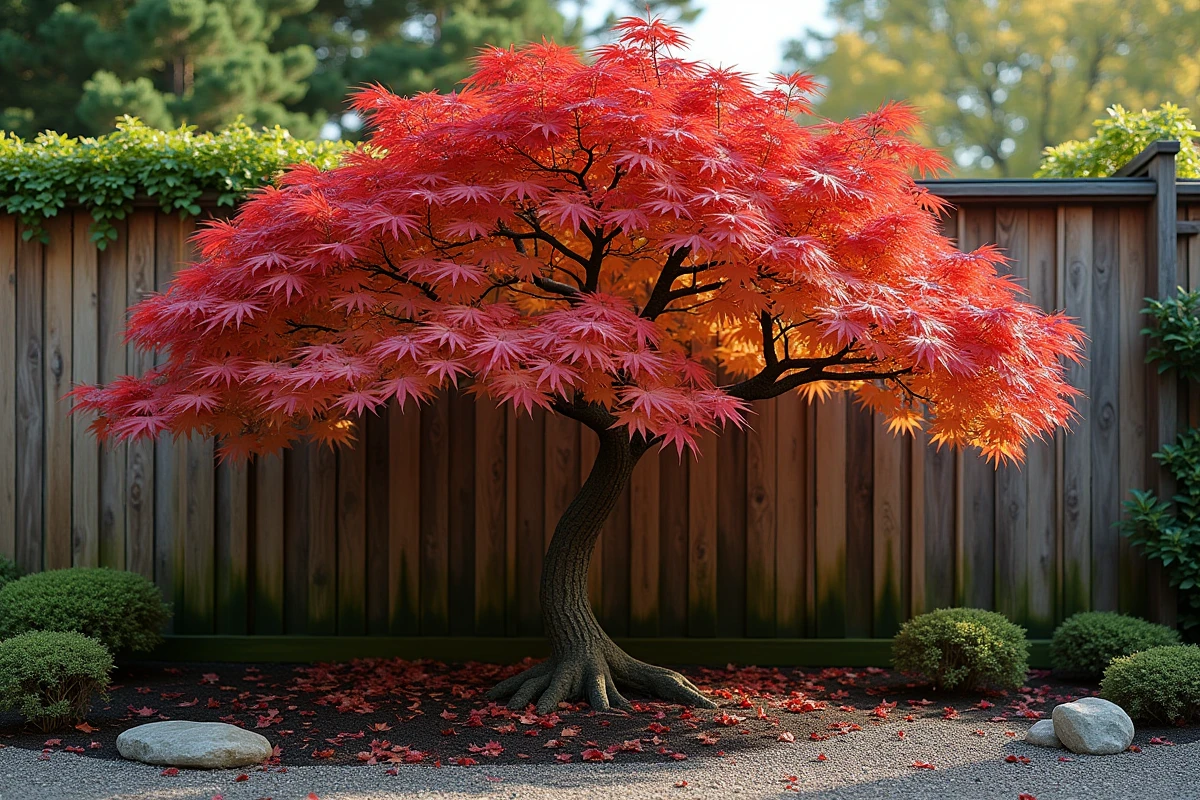
The Japanese maple (Acer palmatum) is a deciduous tree: it naturally loses its leaves every autumn. The question arises when this leaf drop occurs in the middle of the growing season, between April and September. In this case, the tree signals an imbalance between its roots, foliage, and the conditions it is subjected to. Understanding the causes of leaf loss in the Japanese maple outside of autumn allows for intervention before the damage becomes irreversible.
Thermal stress and evapotranspiration: the underestimated cause
Most guides attribute leaf drop to a lack of water or an excess of sunlight, without detailing the actual mechanism. The Japanese maple has very thin leaves, sometimes cut into narrow lobes, which lose water through evapotranspiration much faster than thick foliage.
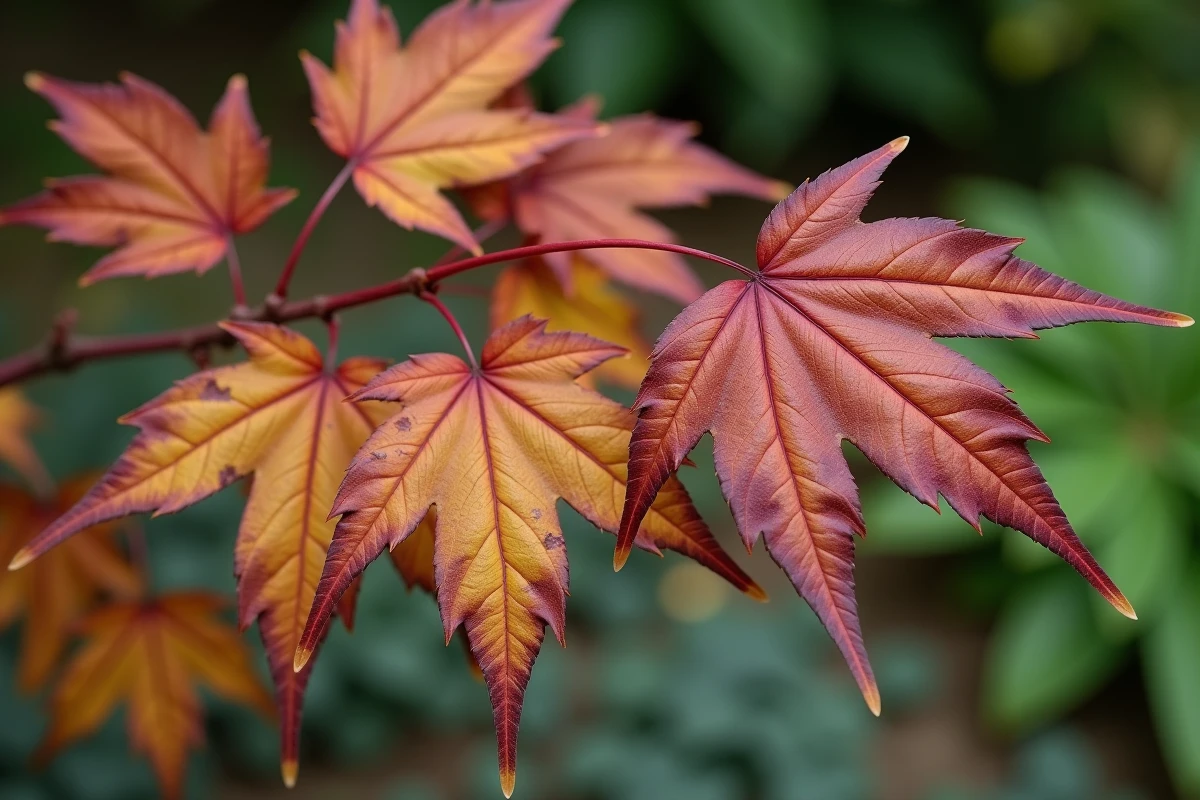
When the temperature exceeds a high threshold for several days, the plant transpires more than its roots can absorb, even if the soil remains moist. The foliage then scorches despite regular watering. The edges of the leaves turn brown first, then the entire blade dries out and falls.
This phenomenon worsens with dry wind, which accelerates evaporation from the surface of the leaves. A maple planted in full sun, in a windy corridor or against a south-west facing wall, experiences double thermal and mechanical stress. The soil may be cool a few centimeters deep without the plant being able to compensate for its aerial water loss.
Three actions reduce this risk before summer:
- Mulch the base with a generous layer of organic mulch (bark, hardwood chips) to maintain soil moisture and limit evaporation at the root level.
- Install a light shade cloth or move the pot to partial shade as soon as temperatures rise consistently.
- Spray the foliage early in the morning (never in full sun) to compensate for some of the evapotranspiration, without wetting the leaves at the end of the day.
Potted Japanese maple: roots confined and substrate clogged
Growing in pots on terraces or balconies has become common. It exposes the Acer palmatum to a mechanical problem that in-ground planting rarely poses: root confinement in an insufficient substrate volume. To better understand the causes of leaf loss in the Japanese maple, one must examine what happens beneath the surface of the pot.
A pot that is too small limits the available water reserve and forces the roots to turn in on themselves. The substrate, compacted over the seasons, loses its drainage capacity. Water stagnates at the bottom, fine roots suffocate, and the plant reacts by dropping its leaves to reduce its evaporation surface.
The paradox is common: the gardener sees leaves falling, increases watering, and worsens root suffocation. A waterlogged soil without drainage causes the same symptoms as a lack of water. The distinction can be made by touch: a substrate that remains soaked for several days after watering, or an acidic soil smell at the collar, betrays an excess of stagnant moisture.
When and how to repot a Japanese maple
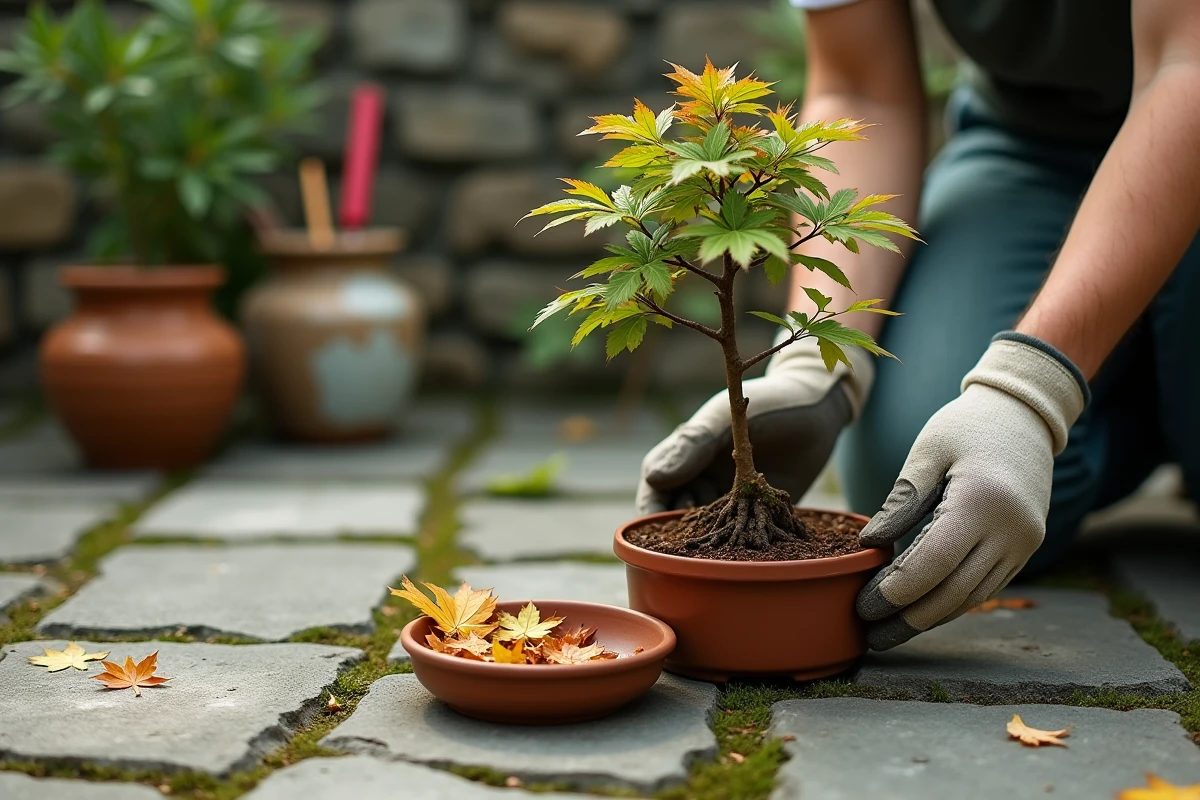
Repotting is ideally done at the end of winter, before the buds begin to swell. The new container should provide several centimeters of margin around the root ball. The bottom of the pot requires a drainage layer (clay balls, pumice), and the substrate should combine heather soil, forest soil, and a drainage material in almost equal parts.
Checking that the drainage hole is not blocked and removing any saucer that keeps the bottom of the pot in water are two simple reflexes that prevent most cases of suffocation.
Black spots and tar spot: foliar diseases that cause leaf drop
Beyond verticillium (often cited as the serious disease of the maple), two foliar pathologies cause spectacular but rarely fatal leaf drop: Phyllosticta black spot and tar spot.
The symptoms look similar at first: dark circular spots appear on the blade, sometimes slightly raised. The leaf yellows around the spot, then falls. Within a few weeks, the tree can lose a visible portion of its foliage without its root system or branches being affected.
These fungi develop mainly in humid and mild weather in spring. They overwinter in fallen leaves on the ground. The most effective preventive measure remains the systematic collection of fallen leaves in autumn to break the contamination cycle.
Should you treat a maple affected by foliar spots?
In the vast majority of cases, these diseases do not threaten the tree’s life. The maple produces a new flush of leaves if the drop occurs early enough in the season. Curative fungicide treatments remain ineffective once the spots are established. Prevention is better than treatment: aerating the foliage through light pruning, avoiding overhead watering, and cleaning the soil under the canopy are usually sufficient to contain the disease from year to year.
Limestone soil and unsuitable pH: a maple that yellows before losing its leaves
The Acer palmatum thrives in a acid to neutral, humus-rich, and well-drained soil. Planted in limestone or alkaline soil, it develops iron chlorosis: the leaves yellow between the veins, then fall prematurely.
This is not a lack of iron in the soil, but a chemical blockage. In alkaline conditions, iron becomes insoluble, and the roots can no longer absorb it. The addition of chelated iron temporarily corrects the symptom, but the problem returns each season if the soil pH is not modified.
Amending the soil with heather soil, leaf compost, or blonde peat gradually lowers the pH. In pots, control is simpler: an acidic substrate from planting and watering with rainwater (less alkaline than tap water) maintain favorable conditions over time.
A Japanese maple that loses its leaves outside of autumn does not necessarily die. The tree signals an imbalance that it compensates for by reducing its leaf surface. Identifying whether the problem comes from the air (heat, wind), the container (pot, drainage), a pathogen, or the soil (pH, compaction) points towards the right response, which is rarely to water more.