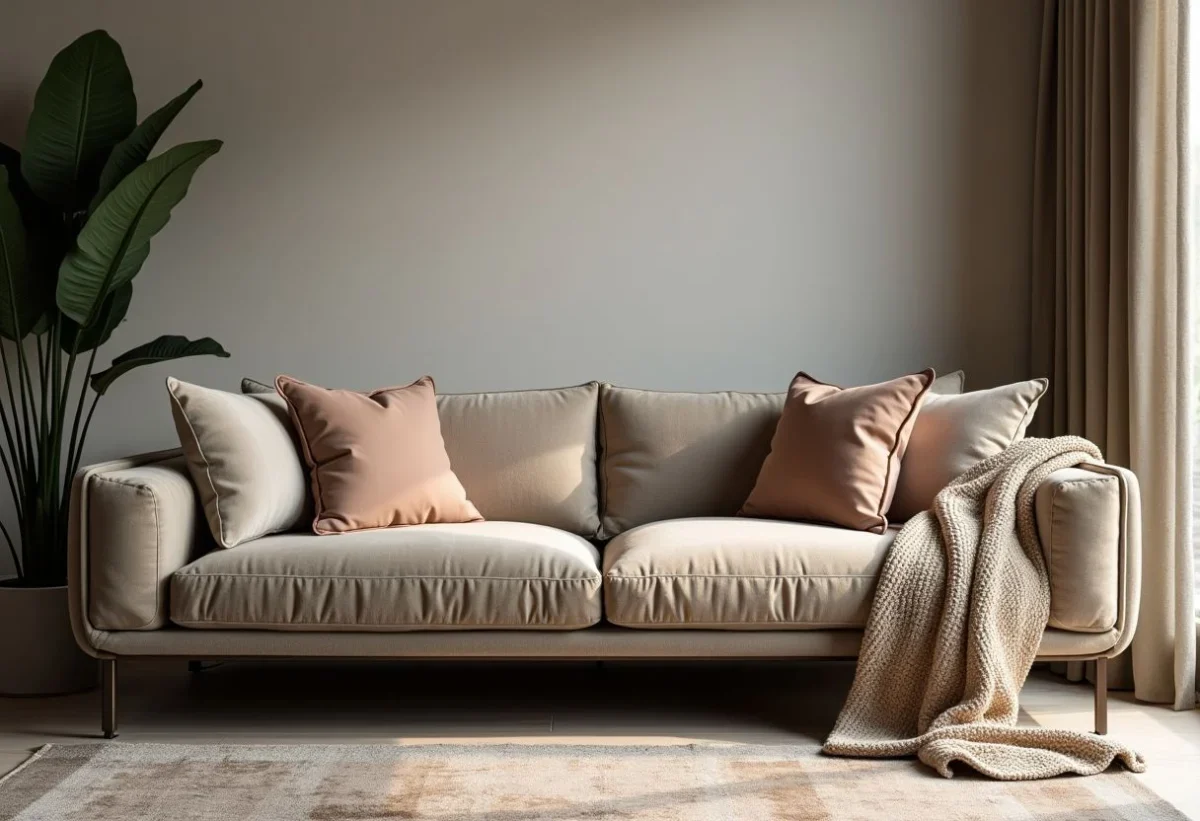
The sofa is the centerpiece of our living rooms, embodying much more than the simple idea of comfort. A design object, a family gathering place, and sometimes a work of art, it is the silent witness of our daily lives. As a true accomplice of our moments of relaxation, it adapts to our lifestyles, our aesthetic tastes, and our functional needs. Whether plush or structured, in leather or fabric, it marks the identity of our interior.
Historical Evolution of the Sofa
The sofa has not always been as we know it today. Its history dates back several centuries, and its evolution reflects cultural and social changes over time.
- Originally, the first sofas appeared in ancient Egypt in the form of benches, often reserved for the elite.
- During the Roman period, divans made their appearance, often used for dining in a semi-reclined position.
- In the Middle Ages, sofas transformed into cushioned chests, providing practical storage space.
- The Renaissance marked an era of creativity, where furniture became more ornate and luxurious, foreshadowing the modern sofa.
Different Styles and Materials
The choice of materials and the style of a sofa is crucial for defining the atmosphere of a room. This piece of furniture comes in an infinite variety of shapes, colors, and textures.
Models in leather bring a touch of sophistication and modernity. Leather is appreciated for its durability and ease of maintenance, although it requires special care to maintain its shine. In contrast, fabric sofas offer a warmer and more adaptable alternative. They stand out for the diversity of patterns and colors available, allowing for the creation of more relaxed and welcoming atmospheres.
Scandinavian design, minimalistic and functional, is characterized by clean lines and neutral colors. In contrast, the baroque style favors opulence with intricate embroidery and bold shapes. The choice of materials also reflects growing ecological considerations, with the emergence of recycled textiles and sustainable options.
How to Choose the Ideal Sofa
Choosing the ideal sofa for your living space can be an exciting challenge. It involves considering several essential criteria that ensure a wise choice.
- Available Space: Measure the room and consider the desired layout. A large sofa can dominate a small space, while a model that is too compact may not suffice in a spacious room.
- Comfort: Test different cushions and padding to find the firmness level that suits you. Comfort remains a determining factor in the final selection.
- Maintenance: Consider the maintenance required based on the chosen material. A fabric sofa may require more frequent cleaning than a leather sofa.
- Aesthetics: Ensure that the design of the sofa harmonizes with the rest of your interior decoration.
The Social and Cultural Role of the Sofa
In our modern culture, the sofa plays a role that goes far beyond its primary function. It has become a space for socialization and sharing.
With family, it brings generations together around television evenings, lively discussions, or shared moments of relaxation. During receptions, it welcomes guests and becomes a place of exchange and conviviality.
In professional spaces, it transforms into a welcoming piece of furniture, symbolizing accessibility and openness.
Finally, in pop culture, the sofa is often the setting for iconic scenes in films and series, marking our collective memories.