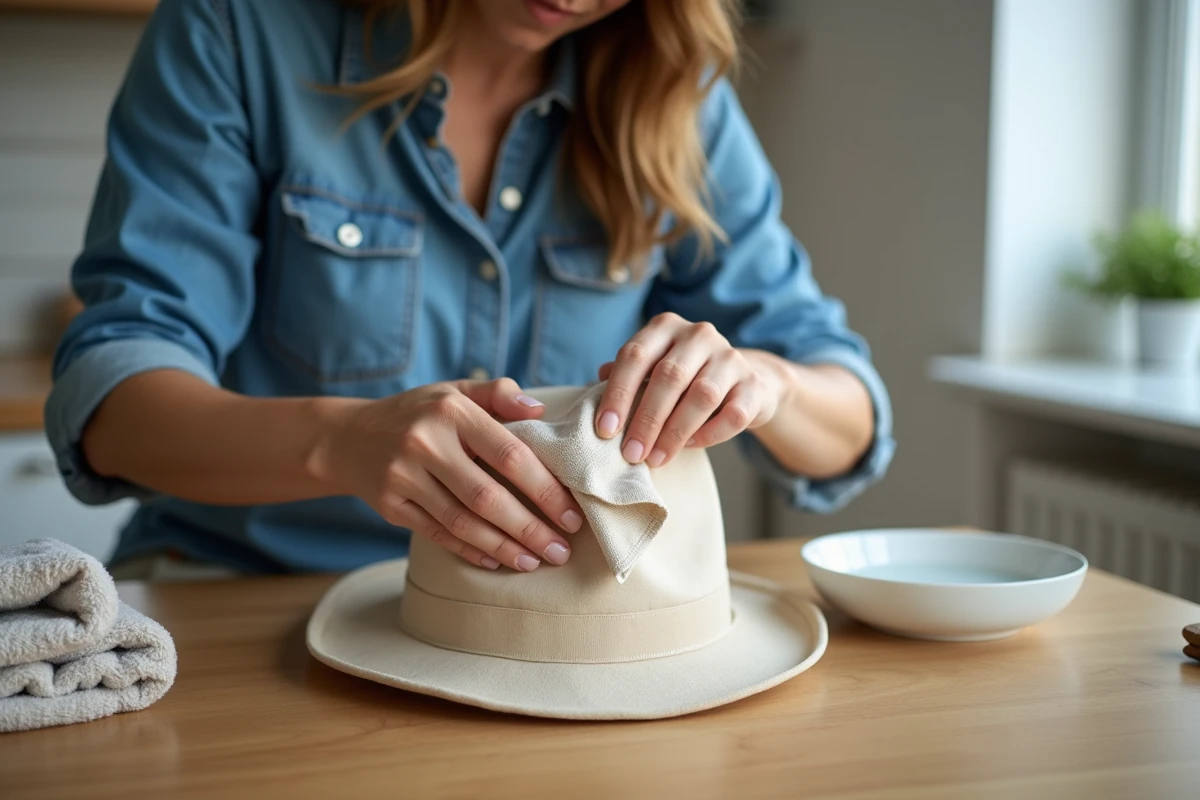
The salt and acid residues produced by sweating interact differently depending on the textile fibers, altering the appearance and texture of the fabric. Some factory treatments further complicate cleaning and may react negatively to common products. The frequency of stain appearance depends as much on the material as on wearing conditions and regular maintenance.
The effectiveness of a solution depends on adhering to the specifications of the hat, the speed of intervention, and the choice of the appropriate product. Neglecting even one of these parameters can lead to discoloration or premature wear.
Why do sweat stains become ingrained on hats?
On most hats, sweat stains imprint like a persistent signature, from the simplest cotton to the most refined panama. Sweat, saturated with mineral salts, accumulates over outings, particularly around the inner band and the gros grain. These areas absorb moisture, leaving behind white marks or, more insidiously, yellow stains that become deeply embedded.
The material of the hat and sweat form a decisive duo: on a cap or felt, sweat ingrains, alters color, and weakens fibers. These are not mere aesthetic defects. These marks result from a chemical reaction between mineral salts and textiles. If the inner band is not regularly maintained, the stains settle in permanently, and cleaning becomes a difficult ordeal.
Another risk: the inner gros grain can shrink due to heat or excess moisture. Hence the importance of knowing the appropriate gestures to preserve both the shape and color of one’s hat. Before attempting aggressive methods, it is worth exploring the tips for cleaning a hat, detailed in the article “Eliminate Sweat from a Hat: Effective and Practical Tips – Magmoiselle.” It offers a range of concrete solutions to treat these stains without risking damage to your headwear.
Solutions based on the material of your hat
Each material imposes its own rules. A straw hat requires a slightly damp white cloth and a touch of mild soap. Here, the action must remain delicate: no need to insist, the plant fiber does not forgive excessive zeal. To restore some flair to a faded straw, a hint of diluted alcohol on a less visible area works wonders, while a diluted hairspray firms up the weakened edges.
A cotton hat generally requires only cold water and a mild detergent. Clean by hand, rinse thoroughly, and then lay flat to dry. Thick cotton models can sometimes go in the washing machine (delicate cycle, air dry). The dryer should be avoided: it alters the shape and size of the hat.
For felt, a soft brush in circular motions is often sufficient. If a stubborn stain persists, mix a little baking soda with water, apply locally, and let it sit. A steam iron can also help dislodge ingrained dirt, especially on older models.
Leather requires a soft cloth that is slightly damp, without adding soap or cleaning products. Excess water would leave marks. As for the cap, if the visor contains cardboard, avoid soaking: prefer hand washing, limiting moisture, and then let it dry without forcing the shape.

Extending the lifespan of your hat: maintenance gestures and stain prevention tips
A hat can last for years if given a minimum of attention. The first reflex: regularly dust with a soft brush or a dry cloth, always in circular motions. This routine limits the fixation of sweat stains and prevents dust from settling. After each use, air the hat outdoors, away from sunlight and any heat source. Retained moisture encourages mold, especially for felt and cotton models.
Prevention remains the best strategy to avoid yellow stains. Several methods are at your disposal:
- Place a hat liner or, if not available, an absorbent band inside.
- Some use an anti-sweat spray or apply a facial antiperspirant on the forehead before wearing their hat, thus limiting the transfer of mineral salts to the fabric.
- Alternate between several hats throughout the week: each headwear thus benefits from a complete drying time.
Storage and handling: the right gestures
To ensure the longevity and shape of your hat, here are some proven tips:
- Store the hat in a hat box or on a hat rack, in a dry and well-ventilated space.
- Avoid plastic bags, which retain moisture.
- For a straw model, always hold it by the brim, never by the crown, to preserve its structure.
- Keep straw and felt away from direct light: the sun fades, heat distorts.
If you own a delicate or vintage hat, do not hesitate to seek professional maintenance. Cleaning promptly as soon as a sweat stain appears gives your headwear every chance to last through the seasons without losing its charm.